Know How to Sleep Better. I Just Don't Do It. So I'm Fixing That
May 11, 2026 · 8 min read · Sleep Science
Know How to Sleep Better. I Just Don't Do It. So I'm Fixing That.
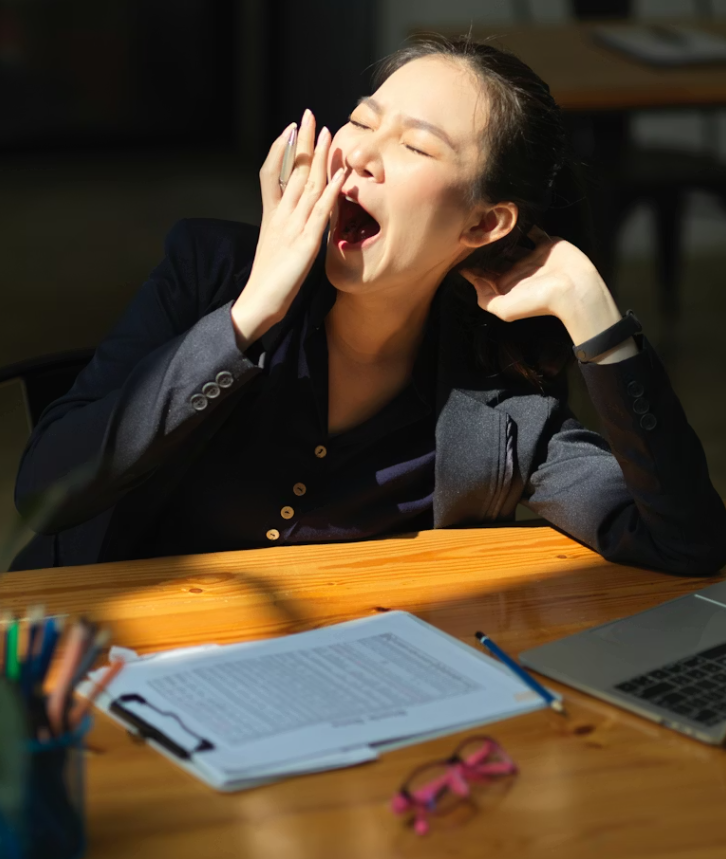
Last Tuesday, I caught myself Googling "why am I always tired" for the third time this month.
That's not a joke. That actually happened.
And here's the embarrassing part: I already knew the answer. I've read the studies. I've written about sleep cycles and blue light and circadian rhythms. I could probably lecture you on the difference between NREM and REM while half asleep — which, let's be honest, is most of the time.
But knowing something and doing something are two very different things.
So I decided to stop being the person who knows better and start being the person who actually tries.
This is my 30-day sleep experiment. No filters. No fake perfection. Just a slightly tired person attempting to fix their sleep — and dragging you along for the ride.
Why I'm Doing This (The Honest Truth)
Let me be real with you for a second.
Reason #1: I'm a hypocrite.
I've been writing about sleep hygiene while falling asleep with my phone on my chest. I've told people to stop caffeine by 2 PM while sipping an iced coffee at 4. I've preached about morning sunlight while stumbling to my laptop like a mole person.
Embarrassing? Yes. Unusual? Probably not.
Reason #2: I need accountability.
If I tell the internet I'm going to do something, I'm way more likely to actually do it. Public embarrassment is a surprisingly effective motivator.
Reason #3: You might be stuck too.
Maybe you already know what "good sleep habits" look like. Maybe you've read the same articles I have. But knowing doesn't fix anything. Action does.
If I can actually improve my sleep — and honestly document the wins and the fails — maybe it'll help someone else do the same.
Or at least provide some entertainment. Either way, we're doing this.
My Sleep Baseline – The Ugly Numbers
Before changing anything, I tracked my sleep for seven days.
I wasn't trying to sleep better. I just observed. Like a nature documentary, except the animal was me, and the habitat was my messy bedroom.
Here's what I found.
|Metric|My Baseline|What's "Good"?| |---|---|---| |Time in bed (average)|7.5 hours|7-9 hours| |Estimated actual sleep|~5.8 hours|7+ hours| |Sleep efficiency|~77%|>85%| |Time to fall asleep|45 minutes|10-20 minutes| |Nighttime awakenings|2-3 times|0-1 time| |Morning fatigue (1-10)|7/10|≤4/10| |Afternoon energy crash|Daily (2-3 PM)|Rare|
Sleep efficiency is just a fancy way of saying: of the time you spend in bed, how much are you actually asleep?
77% means I'm lying awake for nearly a quarter of my time in bed. That's a lot of ceiling-staring.
I'm not proud of these numbers. But they're real. And that's the only place to start.
(Optional: Insert a photo of your handwritten sleep log or a screenshot from a tracking app here. It adds massive trust.)
My 30-Day Goals – What I'm Trying to Achieve
I'm not trying to become a "perfect sleeper." I'm not promising to wake up singing show tunes.
I just want to feel better.
Primary Goals
|Goal|Baseline|30-Day Target| |---|---|---| |Time to fall asleep|45 minutes|<25 minutes| |Nighttime awakenings|2-3 times|≤1 time (or fall back asleep quickly)| |Sleep efficiency|77%|>85%| |Morning fatigue (1-10)|7/10|≤4/10|
Secondary Goals
-
Reduce afternoon caffeine dependence (from "absolutely need it" to "nice to have")
-
Build a consistent wind-down ritual (from "none" to "automatic habit")
-
Figure out which 1-2 interventions actually work for me
Notice I'm not promising to sleep 9 hours like a house cat. Small, realistic improvements. That's the goal.
What I'll Be Testing – The Intervention Protocol
I've broken the 30 days into four phases. Each week focuses on a different category.
I won't add everything at once. That's a recipe for failure. Week 1 is just environment. Week 4 is the advanced stuff.
Week 1 (Days 1-7): Environment
|Intervention|What I'll Actually Do|Why It Should Work| |---|---|---| |Cool bedroom|Set thermostat to 65-68°F (18-20°C)|Lower temps signal your body to produce melatonin| |Block blue light|Night mode on by 8 PM, dim overhead lights|Blue light suppresses melatonin (Harvard agrees)| |No phone in bedroom|Charge phone in the kitchen|Notifications = tiny wake-up calls|
Week 1 mindset: Just show up. These are the easiest changes. If I can't do these, I'm in trouble.
Week 2 (Days 8-14): Routine
|Intervention|What I'll Actually Do|Why It Should Work| |---|---|---| |Fixed wake time|Same alarm every day. Yes, weekends.|Circadian rhythm loves consistency| |Morning sunlight|10-15 minutes outside within 30 min of waking|Sets your internal clock like a reset button| |Wind-down ritual|Same 30-minute sequence every night|Trains your brain: "this means sleep soon"|
Week 2 mindset: This is where discipline starts to matter. Morning light is free but annoying. I'll do it anyway.
Week 3 (Days 15-21): Diet & Supplements
|Intervention|What I'll Actually Do|Why It Should Work| |---|---|---| |Caffeine cutoff|No coffee/tea after 2 PM|Caffeine's half-life is 5-6 hours| |No late snacks|Finish eating 2-3 hours before bed|Digestion interferes with deep sleep| |Magnesium (optional)|Magnesium glycinate 30 min before bed|Some evidence it improves sleep quality|
I'm trying magnesium because the research is decent and it's low risk. If you don't want to try supplements, just skip this part. The rest of the experiment still works.
Week 4 (Days 22-30): Mindset & Techniques
|Intervention|What I'll Actually Do|Why It Should Work| |---|---|---| |Breathing exercise|4-4-6 method before sleep (inhale 4, hold 4, exhale 6)|Activates your "rest and digest" system| |Stimulus control|If not asleep in 20 min, get out of bed|Breaks the "bed = frustration" association| |Brain dump|Write tomorrow's to-do list before bed|Gets tasks out of your head so you can relax|
Week 4 mindset: The harder stuff. But by now, hopefully the foundation is solid.
My Daily Tracking Method
Every morning, I'll fill out this log. It takes two minutes.
Daily Sleep Log
Date: ________
Bedtime (lights off): ___ : ___ PM
Wake time (out of bed): ___ : ___ AM
Time to fall asleep: ______ minutes
Nighttime awakenings: ______
Total estimated sleep: ______ hours
Morning fatigue (1-10): ______
What I tried yesterday (check all that apply):
□ Cool bedroom
□ No screens after 8 PM
□ Phone outside bedroom
□ Morning sunlight
□ Caffeine cutoff by 2 PM
□ Wind-down ritual
□ Breathing exercise
□ Stop Eating 2‑3 Hours Before Bed
□ Keep My Bed for Sleep and Only Sleep □ Other: _________Notes: _________________________________
At the end of each week, I'll calculate my averages and share them here.
(Optional: Add a screenshot of your actual log template here.)
Weekly Check-Ins – How to Follow Along
I'll post an update every Thursday for the next four weeks.
|Week|Post Date|What You'll Get| |---|---|---| |Week 1|Day 8|Did environment changes help? How hard was it?| |Week 2|Day 15|Routines + morning light — worth the effort?| |Week 3|Day 22|Diet tweaks + magnesium — any difference?| |Week 4|Day 30|Final data, biggest lessons, what I'll keep doing|
Subscribe below, and I'll send each update straight to your inbox. No spam. Just real data from someone trying to figure this out — same as you.
Want to Join Me? Here's How
You don't need to copy my entire protocol. That would be weird. We're different people with different lives.
Option 1: Pick 2-3 changes.
Try them for a week. See what happens. You don't need an elaborate experiment.
Option 2: Download my sleep log template.
I've made a printable version of the daily log I'm using. It's free. Grab it through the subscribe box below.
Option 3: Share your own baseline.
Drop a comment and tell me: what's your biggest sleep struggle right now?
Is it falling asleep? Staying asleep? Waking up feeling like a zombie?
Let's compare notes. Misery loves company, but improvement loves accountability.
A Quick Reality Check (Managing Expectations)
Before we go any further, let me be clear about what this experiment isn't.
-
This isn't a medical study. It's just me, n=1. What works for me might not work for you.
-
I'm not a doctor. If you have sleep apnea, chronic insomnia, or suspect something serious — please see an actual professional.
-
I might fail at some of this. Week 3 might be a disaster. I might forget to track things. I'll tell you about it.
-
30 days isn't magic. Good sleep is a long-term thing. This is just the start.
I might have a terrible Week 2. I might cheat on the caffeine rule. And I'll tell you about it. Because that's the point — not perfection, but what actually happens when someone tries.
What's Next?
Check back next Thursday for my Week 1 update.
I'll share:
-
Did the temperature + blue light changes help?
-
How hard was it to actually stick to the protocol?
-
What surprised me most (so far)
And if you want these updates delivered automatically…
Before You Go…
If this article made you think, "Okay, maybe I could try one or two of these things," here's how you can help:
-
👍 Like this post – It tells me this experiment is worth continuing.
-
💬 Comment below – What's your biggest sleep struggle right now? Be honest. Mine was the 4 PM coffee.
-
📩 Subscribe – Get the free sleep log + weekly experiment updates. Unsubscribe anytime.
👉 Type your email in the box and hit subscribe. Let's fix our sleep — one imperfect week at a time.
See you on Day 8,
SleepDetFix